
The golden era of building one massive application to solve every conceivable human problem is dead, and frankly, that is the best thing to happen to the mobile software industry. As a backend developer structuring cloud-based communication services and API integrations at Dynapps LTD, I spend my days looking at server logs, latency metrics, and actual usage patterns. The data tells a very different story than the marketing narratives you see on tech blogs. Users are not looking for bloated ecosystems; they are actively searching for highly specific, secure solutions to immediate, practical problems.
By 2026, the global mobile app economy has shifted fundamentally. According to recent data from Ericsson cited in a 2026 Itransition market report, there are over 8.9 billion mobile subscriptions globally. Yet, despite this significant connected user base, developers continue to misunderstand how people actually interact with their devices. Today, I want to dismantle four of the most persistent misconceptions shaping how a mobile company builds apps, and how consumers ultimately choose them.
Stop Chasing the Mega-App Illusion
There is a persistent myth that consumers want all their communication, shopping, tracking, and media centralized in a single "super app." The reality of the backend infrastructure required to support this reveals why it usually fails. When you bundle a dozen unrelated features into one client, you introduce substantial API bloat, increase the attack surface for security vulnerabilities, and drain device batteries with constant background polling.
Appalize's 2026 State of Mobile Apps report noted that consumer spending reached an estimated $540 billion in 2025. People are willing to pay, but they prefer specialized tools. Consumers want tools that execute a single function perfectly rather than a dozen functions poorly. If you need a hammer, you don't buy a 50-pound multi-tool.
My colleague Naz Ertürk has discussed this exact behavioral shift regarding how to choose the right mobile app category for everyday communication needs. Users categorize their digital lives by intent. This philosophy is why our own portfolio remains distinct. Rather than forcing features together, we maintain separate infrastructure for separate needs.

Disconnect Hardware Upgrades From Software Utility
Another major fallacy is the assumption that users need the latest hardware to access premium software utility. Every September, the industry acts as if communication and connectivity are entirely dependent on buying a new device. From an engineering perspective, this is simply false.
While an iPhone 14 Pro features a brilliant processor and advanced camera sensors, those hardware specs do not magically improve a poorly routed voice-over-IP (VoIP) call. I regularly monitor request headers, and I can confirm that a large portion of the global user base still relies on older devices. Whether a user is holding an iPhone 14, an older iPhone 13, or even an aging iPhone 11, the software must perform with the exact same reliability.
Consider the mechanics of maintaining personal privacy. Many users assume they need dual-SIM hardware or a flexible carrier plan like Google Fi just to separate their work and personal lives. While network flexibility is great, the software layer can solve this much more efficiently. A user who needs a temporary line for a classified ad, a dating profile, or an online marketplace does not need to physically provision a new SIM card.
This is where specialized utility apps provide disproportionate value. For example, Second Phone Number DoCall 2nd is built specifically to handle this at the software level. Our backend handles the complex SIP (Session Initiation Protocol) routing, bypassing hardware constraints entirely. You get a second dedicated phone number that operates over standard data networks, delivering enterprise-grade call routing regardless of the physical handset you are using.
Rethink Mobile Monetization Frameworks
For years, the industry operated under the myth that forcing users into expensive, recurring monthly subscriptions was the only way to build a sustainable business. By 2026, consumer subscription fatigue has forced a correction. A recent industry report from ForesightMobile on the 2026 App Economy revealed that over 60% of top-grossing apps are now utilizing hybrid monetization models.
Why is this shift happening? Because utility software usage is often episodic. You might need a virtual number for exactly three weeks while selling a car, or you might need a chat analysis tool exactly once a year. Forcing a perpetual subscription on these use cases leads to immediate churn and negative app store reviews.
At Dynapps, we look closely at how our backend resources align with user value. Apple's App Store generates roughly 1.7x the revenue of Google Play with only one-third of the downloads (as highlighted in Appalize's market breakdown). This efficiency comes from users who trust the billing mechanics and feel they are getting proportional value. When apps include flexible purchasing options—like pay-as-you-go credits for international calls in DoCall, or specific timeframe unlocks for family monitoring tools—retention rates stabilize.
Stop Treating Analytics as Invasive Surveillance
There is a delicate line between providing actionable insights and building surveillance software. In the realm of family coordination, many tracking applications overstep, constantly pulling GPS coordinates and draining batteries, causing friction between family members.
The myth here is that "more data equals better security." As an engineer, I strongly disagree. Continuous background location tracking is heavily resource-intensive and often unnecessary for basic peace of mind. What users often actually want is simple, asynchronous confirmation of digital safety.
We designed Mona - Family Tracker App around a much lighter, more respectful architecture. Instead of hardware-level GPS surveillance, Mona focuses on online status and last-seen tracking for platforms like WhatsApp and Telegram. The backend securely processes public status flags to provide parents with straightforward analytics on digital activity. It solves the core anxiety—knowing a family member is active and safe online—without the heavy-handed approach of physical tracking. This distinction in product design is crucial for modern user adoption.
Applying AI for Practical Data Insights
Finally, we must address the most prevalent myth of 2026: that Artificial Intelligence is just a conversational gimmick. The industry is flooded with generic chatbot wrappers that offer zero long-term value. ForesightMobile's 2026 analysis correctly points out that the apps winning in this market are using AI features to "create genuine switching costs."
What does a genuine switching cost look like in software? It means the AI performs a complex data-processing task that the user cannot easily replicate elsewhere. As someone who builds API pipelines, I see the true value of AI in its ability to parse unstructured data securely and return structured, entertaining, or useful insights.
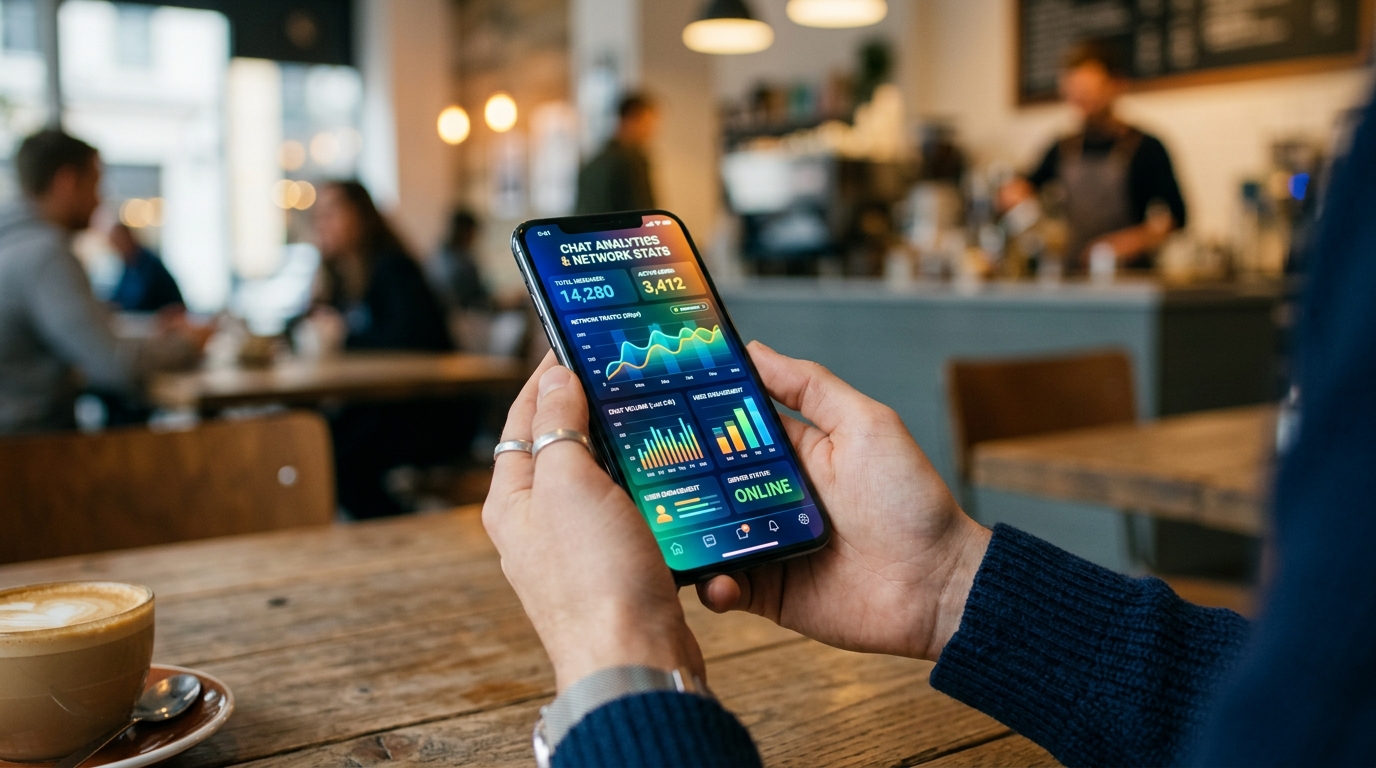
Take messaging history. Over the course of a year, you might generate tens of thousands of messages with a partner or a best friend. Reading through that manually to find trends is impossible. We built Wrapped AI Chat Analysis Recap to solve this specific, localized problem. The user exports their chat history, and our backend utilizes advanced language models to synthesize that data into a fun, highly detailed summary of their digital relationship. The AI isn't pretending to be a human; it is acting as an ultra-fast data analyst working on your personal archive.
Prioritize Infrastructure over Hype
The mobile applications that will survive the next five years are not the ones with the loudest marketing campaigns. They are the ones built on solid, scalable infrastructure that respects the user's device limitations, their wallet, and their privacy.
Whether you are using a legacy device or the newest flagship phone, your software should work reliably. Focus on finding tools that solve your specific problems efficiently. In my experience managing servers and routing protocols, the simplest architecture almost always delivers the best user experience.