
Last Tuesday, I sat in a strategy room with a product team paralyzed by their own feature backlog. They had spent six months drawing up an elaborate, multi-year plan for an all-in-one communication suite. The whiteboard was covered in connecting arrows, API dependencies, and monetization phases. But when I asked a simple question—What specific, immediate problem does this solve for a user standing in line at the grocery store?—the room went completely quiet. They were building a massive ecosystem for themselves, not a utility for their users.
A modern mobile product roadmap is not a timeline of software features; it is a strategic alignment between user friction points and specialized, low-latency utility. When a company maps its long-term product direction solely around what its engineers can build, rather than what hardware and network constraints dictate, the result is bloated software that users abandon within days.
At Dynapps LTD, our product philosophy relies on stripping away this bloat. As an editor watching the software market mature, I’ve observed that the teams succeeding in 2026 are those ruthlessly focused on task-specific utility. To map a product roadmap to actual human needs, you have to follow a structured, problem-first methodology. Here is a step-by-step breakdown of how a forward-thinking mobile strategy actually comes together.
Step 1: Stop looking at features and start mapping utility gaps
The mobile app industry is expanding rapidly, but the nature of user engagement has completely shifted. According to a 2026 Appalize report on the state of mobile apps, the global market reached an estimated $540 billion in consumer spending in 2025, with projections pushing toward $620 billion by the end of 2026. But users aren't spending that money on sprawling ecosystems; they are paying to solve acute problems quickly.
Instead of brainstorming features, your first step is to identify utility gaps. A utility gap occurs when a user tries to accomplish a basic task—like separating work calls from personal calls—and finds that the default operating system tools are either too rigid or too invasive.
Actionable Tip: Build a framework to evaluate ideas before they hit the engineering queue. Ask three questions:
1. Does this solve a problem the user experiences at least twice a week?
2. Can the user complete the core action in under ten seconds?
3. Does adding this capability degrade the core performance of the app?
As Berk Güneş has previously argued, specialized applications consistently outperform complex software because they allow developers to optimize low-latency routing for one exact problem.

How do we align architecture with shifting tech economics? (Step 2)
Once you identify a genuine utility gap, the next step is validating whether your technical infrastructure can support the solution over the long haul. This is particularly critical when integrating processing-heavy tasks.
I frequently talk to developers who want to integrate heavy data parsing into every project. But Deloitte’s Tech Trends 2026 report highlights a massive structural issue: the infrastructure built for legacy cloud-first strategies simply cannot handle the economics of modern, processing-heavy applications. If you build a roadmap dependent on massive cloud server farms, your operational costs will outpace your revenue before the year ends.
To build sustainably, your roadmap must prioritize localized processing and efficient code over brute-force cloud computing. You map product decisions based on what can run cleanly on the device itself, reducing server dependency and protecting user privacy by keeping data local whenever possible.
Actionable Tip: Transition your infrastructure planning from "cloud-reliant" to "edge-optimized." If an operation can be performed by the device's native processor, leave it there. This dramatically lowers latency and reduces infrastructure bloat.
Step 3: Map user journeys across varying hardware environments
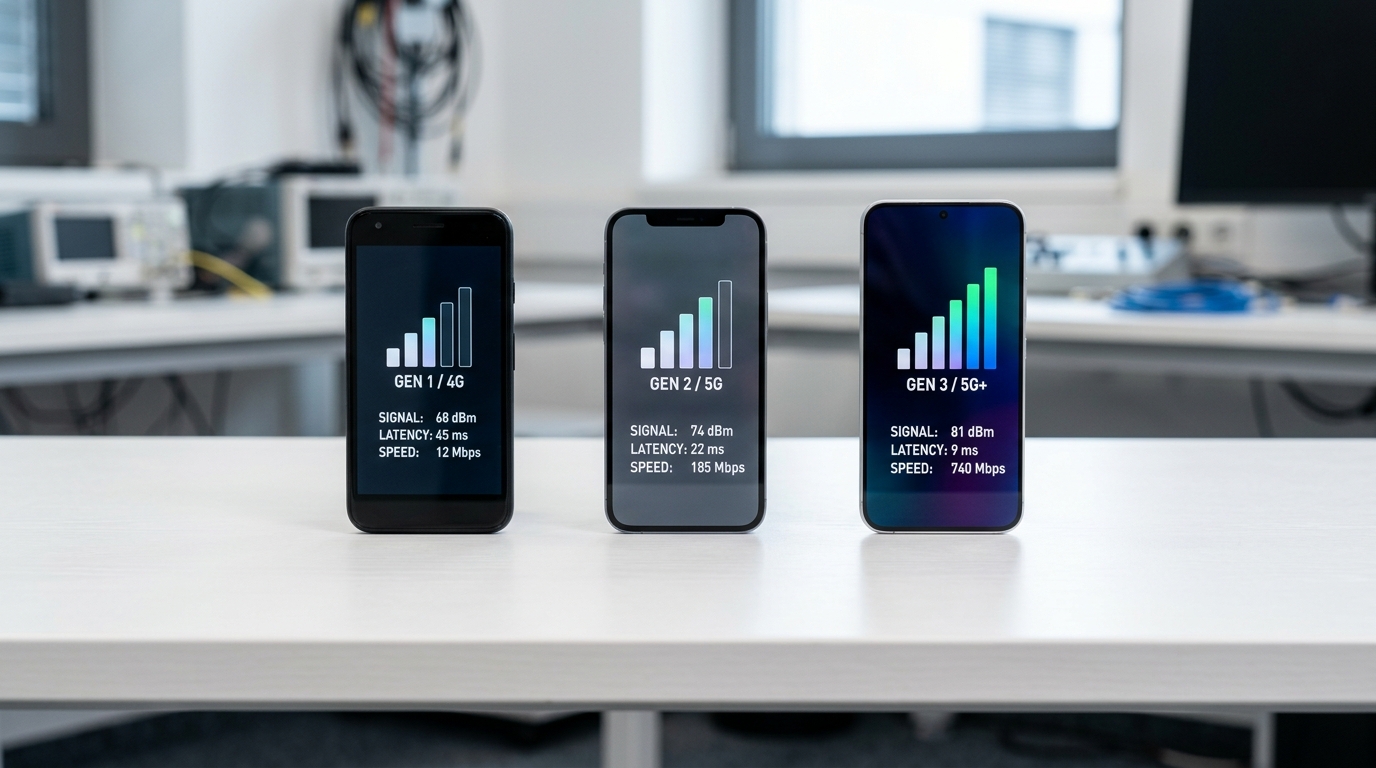
A fatal mistake in product planning is assuming your entire user base upgrades their hardware annually. The reality of hardware adoption is highly fragmented. A resilient company plans its software to function perfectly across multiple generations of devices and varied network conditions.
Your roadmap must include specific optimization phases for older technology. Whether a user is holding onto an older iPhone 11, skipping the upgrade cycle with an iPhone 13, or relying on the heavy processing capabilities of an iPhone 14 or an iPhone 14 Pro, the core utility of your software must remain stable.
Furthermore, network conditions dictate how mobile tools perform in the real world. A VoIP application needs to handle aggressive network switching without dropping the connection—for instance, when a user moves off a Wi-Fi network and onto a hybrid mobile virtual network operator like Google Fi while walking down the street. If your roadmap only accounts for perfect 5G environments, your product will fail in practical scenarios.
Actionable Tip: Mandate real-world constraint testing. Do not just test your beta versions on the latest flagship devices. Force your quality assurance teams to use three-year-old hardware on throttled 3G networks. If the software lags, it fails the utility test.
Mapping practical solutions: Communication, coordination, and analysis (Step 4)
How do these principles translate into actual products? Let’s look at how targeted software solves distinct problems without overlapping functionality.
When a professional needs to separate their freelance business calls from their private life, they do not need a massive enterprise management suite. They need a simple, reliable routing tool. A second phone number application solves this specific friction point. By utilizing VoIP technology, tools like DoCall 2nd give users a virtual communication line that exists entirely separate from their physical SIM card. It maps directly to the user's need for privacy and boundaries.
The same focused approach applies to coordination tools. Parents trying to coordinate family schedules don't want intrusive, battery-draining continuous location pinging that slows down their device. They want efficient, reliable status updates. The Mona app addresses this by providing precise online status coordination without draining battery life or overcomplicating the interface.
Finally, we must consider the friction of data overload. Users often want to make sense of their digital interactions without manual effort. An analysis tool like Wrapped AI solves this by taking exported chat histories and turning them into structured, AI-driven summaries. It provides value by simplifying complex data into an easy-to-read format.
Actionable Tip: Audit your app's primary screen. If a user cannot access the core function of your app within one tap of opening it, your user interface is getting in the way of your utility. Redesign the flow to prioritize immediate action.
Step 5: Ditch rigid timelines for insight-driven iteration loops
The final step in future-proofing your mobile strategy is abandoning the traditional 18-month static roadmap. In an industry where user expectations shift quarterly, setting rigid feature lists a year in advance is a liability.
Recent data from Adjust's 2026 Mobile App Trends report shows that global app installs climbed 10% year-over-year in 2025, but user retention relies heavily on long-term value rather than just initial engagement. To maintain that retention, your roadmap must be fluid. It should be structured as an iteration loop based on quantitative performance data and direct user feedback.
Instead of mapping out "Feature A in Q3," map out "Solving Latency in Q3." If users report that message delivery is slow under certain conditions, that becomes the priority. If they request a faster way to organize temporary contacts, that dictates the next sprint. A company that listens to where users struggle will always build better software than a company that only listens to its own internal timelines.
Actionable Tip: Restructure your planning cycles into six-week specialized sprints focused on specific user outcomes rather than predefined feature rollouts. Measure success by the reduction of user complaints and the increase in daily active sessions.

Final thoughts on building for reality
Structuring a product roadmap around genuine utility requires discipline. It means saying no to flashy integrations that don't serve the core purpose. It means testing rigorously across older hardware and fluctuating networks. Ultimately, mapping product decisions to real mobile needs ensures that the apps you build aren't just downloaded—they are relied upon every single day.