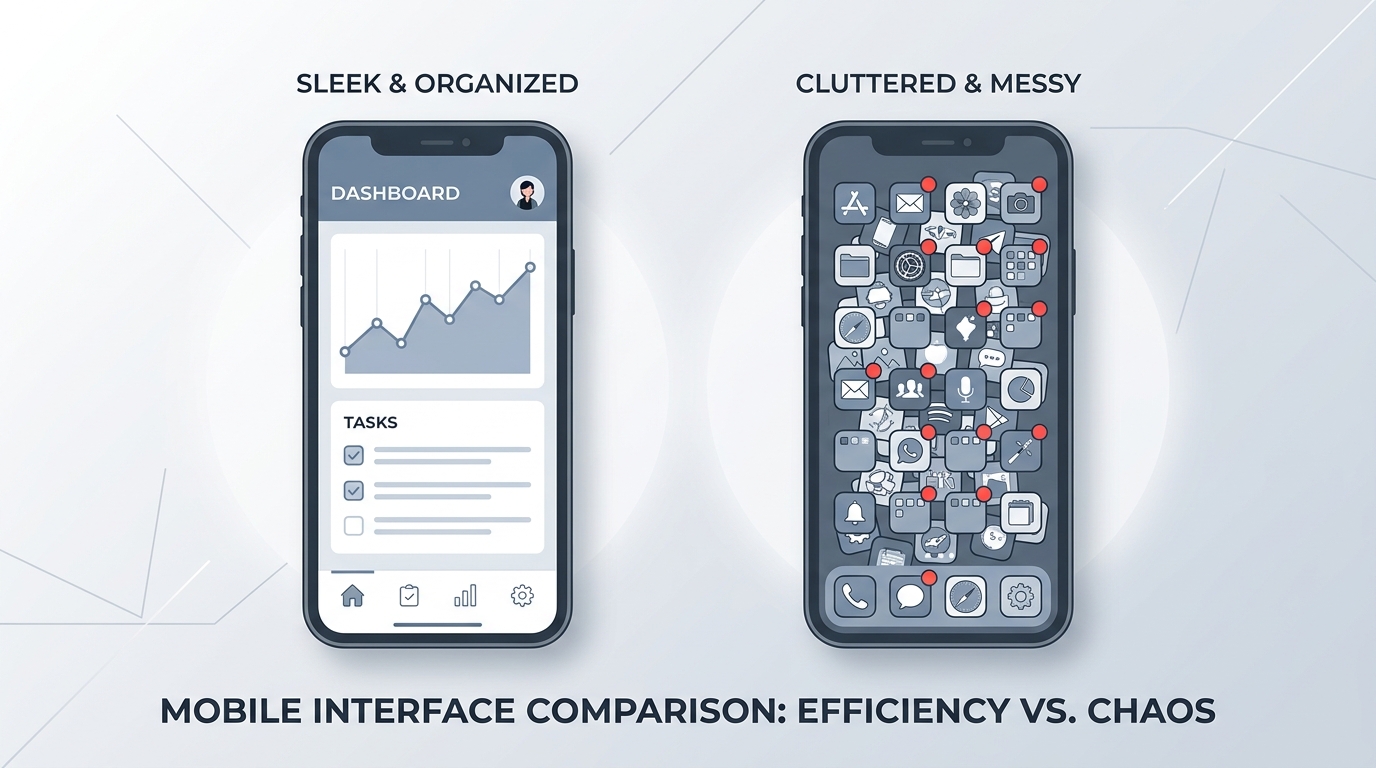
Throwing a thousand dollars at new hardware won't fix the software bloat slowing down your daily workflow. Consumers frequently assume that upgrading their device will solve operational friction, but processing power cannot compensate for poorly optimized applications. A mobile utility ecosystem is a tightly integrated network of single-purpose applications designed to execute specific, high-frequency tasks—like secondary communication or targeted data analysis—without demanding excessive user attention or draining device resources. As a product manager at Dynapps LTD, I constantly observe users trying to solve software problems with hardware purchases, a strategy that yields diminishing returns.
The mobile app economy is undergoing a massive structural shift this year. According to Sensor Tower’s recent industry data, global consumer spend on mobile apps reached a record $150 billion in 2025, representing a 13% year-over-year increase. However, the distribution of that spend has changed dramatically. More than 60% of top-grossing apps now utilize hybrid monetization models rather than rigid, single-tier subscriptions. Users are paying for specific utility, not bloated feature sets they never use.
This analysis compares the traditional approach of relying on heavy, generalized software and expensive native carrier plans against the modern strategy of deploying focused, task-specific mobile applications.
Hardware iterations offer diminishing returns compared to software optimization.
Many consumers automatically upgrade their devices assuming older models can no longer handle modern communication demands. Let us compare the practical outcomes of running optimized utility apps across different hardware generations.
When developers prioritize ephemeral data parsing and low-latency routing, older silicon performs exceptionally well. An iPhone 11 or an iPhone 13 running a highly focused, task-specific application often uses less battery and delivers faster task completion than an iPhone 14 or an iPhone 14 Pro bogged down by background tracking from bloated mega-apps. The issue is rarely the processor; the issue is how inefficiently general-purpose software queries the operating system.
- General-Purpose Mega-Apps: Drain battery quickly by maintaining constant background connections, require frequent updates that bloat storage, and cause thermal throttling even on an iPhone 14 Pro.
- Focused Utility Apps: Operate efficiently on an iPhone 11, execute processes locally whenever possible, and shut down background activity the moment the core task is completed.
Dedicated communication lines outperform standard carrier setups.
Managing privacy and professional boundaries requires strict separation of communication channels. Historically, achieving this meant purchasing a second physical SIM card, carrying two devices, or subscribing to complex multi-line native carrier plans.
Let us compare a premium native carrier service, such as Google Fi, with a dedicated Voice over IP (VoIP) application.
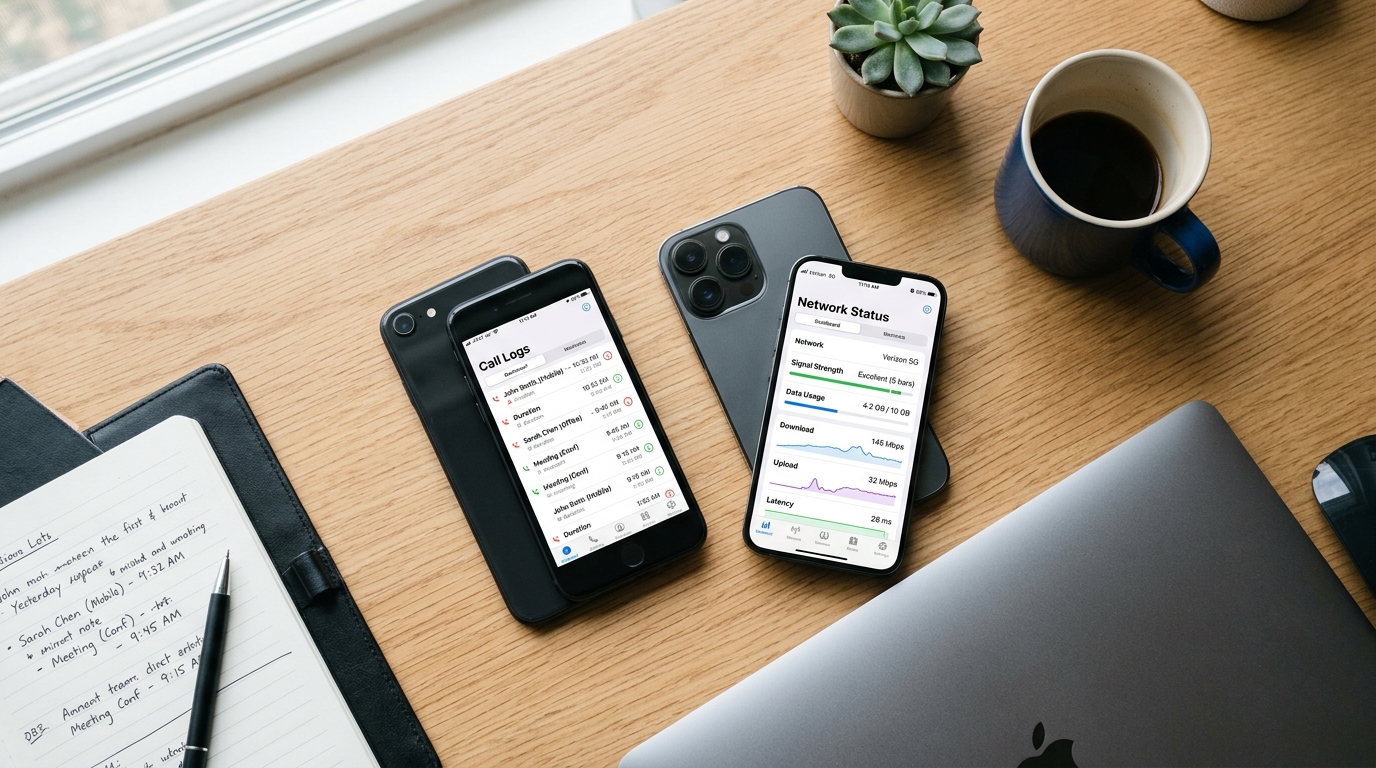
A native plan like Google Fi provides excellent baseline connectivity and international roaming. However, when you need a temporary number for a short-term project, online selling, or digital privacy, altering a primary carrier contract introduces unnecessary friction. Conversely, deploying a Second Phone Number DoCall 2nd allows a user to generate, utilize, and eventually burn an independent line entirely within the application layer. The app uses your existing data connection to route calls and texts securely.
Comparison: Native Carrier vs. App-Based Secondary Lines
- Flexibility: App-based lines can be activated or paused in seconds. Carrier lines often require plan modifications or physical/eSIM provisioning.
- Privacy Control: A dedicated app creates a sandbox for specific contacts. You can mute the entire application after business hours, a feature traditional phone dialers struggle to implement effectively.
- Cost Efficiency: Users only pay for the VoIP credits or short-term hybrid subscriptions they actually consume, avoiding permanent additions to their monthly telecom bills.
As my colleague Berk Güneş noted when debunking 2026 mobile app myths, flexible VoIP protocols are rapidly replacing the need for multiple physical SIM cards in professional environments.
Targeted family tracking replaces generalized social sharing.
In my specific area of expertise—designing tools that connect families safely—the contrast between broad social applications and focused utilities is stark.
Parents and caregivers often default to location-sharing features built into major social networks or heavy, generic tracking platforms. These platforms typically include messaging feeds, algorithmic content, and aggressive notification systems that distract from the core goal: verifying family safety.
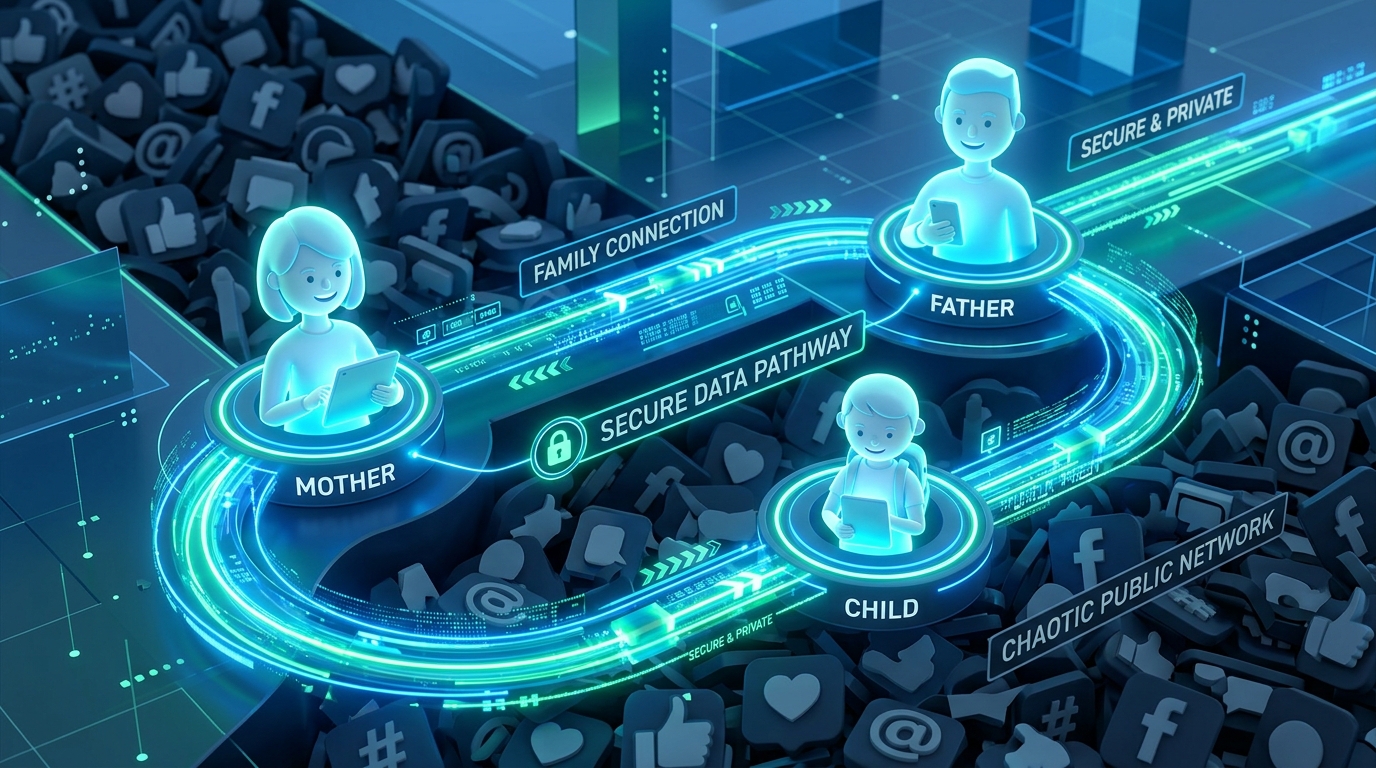
Compare this to a specialized utility like Mona - Family Tracker App. A dedicated tracker operates with a singular focus. It strips away social feeds, avoids advertising networks that monetize location data, and delivers precise, necessary information about family online status or location without demanding constant user engagement. Naz Ertürk recently explained this concept in detail regarding how to choose the right mobile app category for everyday communication, highlighting that users need precise solutions, not more social networks.
- Broad Social Trackers: Monetize user data for targeted advertising, consume high battery due to continuous background polling, and expose users to unnecessary social interactions.
- Focused Family Trackers: Prioritize encrypted data transfer, optimize location polling to preserve battery life, and restrict data access exclusively to approved family members.
Task-specific AI agents deliver higher value than general chatbots.
The conversation around artificial intelligence has matured rapidly. We are moving past the novelty phase of asking open-ended questions to general language models. Organizations and individual users now require AI to perform highly specific, constrained tasks reliably.
Recent projections from Gartner research indicate that by the end of 2026, 40% of enterprise applications will feature task-specific AI agents, up from less than 5% in 2025. Furthermore, Deloitte’s 2026 Tech Trends analysis highlights a critical economic reality: "The infrastructure built for cloud-first strategies can't handle AI economics." Compute power must be applied precisely where it creates maximum value, not wasted on generalized, infinite-context queries.
We can clearly see this shift by comparing a general-purpose chat interface to a constrained analytical tool. If you want to analyze your personal communication habits, pasting thousands of messages into a public, generalized chatbot raises severe privacy concerns and often yields hallucinated, generic summaries.
By comparison, a focused utility like Wrapped AI Chat Analysis Recap is designed strictly for one function: parsing exported chat histories locally and generating structured, entertaining summaries. It does not attempt to be a universal assistant. It applies specialized parsing logic to format messy text exports, runs the data through a constrained summarization model, and outputs a specific visual format.
Comparison: General LLMs vs. Task-Specific AI Utilities
- Accuracy: Task-specific agents use strict prompt constraints optimized for one data type, reducing errors dramatically compared to general models.
- Data Privacy: Focused applications can process structural data locally or use secure, ephemeral API calls, whereas general chatbots frequently ingest user input for future model training.
- User Experience: A specialized app requires zero prompt-engineering from the user. The complex instructions are hardcoded into the backend infrastructure.
Hybrid monetization outpaces rigid subscription tiers.
Finally, any comparison of the 2026 app ecosystem must address how users pay for software. The era of subscribing to a dozen different apps for $9.99 a month is over. Subscription fatigue has forced the industry to adapt.
As a company building everyday utilities, Dynapps recognizes that some tools are used daily, while others are required only sporadically. A user might need an extra phone number for a two-week freelance project, or they might want to run a chat analysis once a year. Forcing these users into permanent annual contracts creates immediate churn.
Hybrid monetization—combining low-cost base tiers with pay-as-you-go credits for intensive compute tasks—allows users to scale their software usage exactly as they would scale a utility bill. It aligns the cost of the software directly with the value derived by the consumer.
A structured approach to your software ecosystem.
When auditing your daily digital tools, apply a strict comparative framework. Look at the applications draining your battery and demanding your attention. Ask yourself if a heavy, multi-purpose platform is truly serving your needs better than a lightweight, single-purpose alternative.
Before you decide that an iPhone 13 is obsolete and rush to purchase an iPhone 14, evaluate the software demanding that processing power. By replacing bloated mega-apps with focused utilities—whether for a second communication line, family coordination, or precise data analysis—you regain control over your device's performance, your privacy, and your monthly budget.